

Beware: Most Recent ID Theft & Scam Alerts and How to Safeguard Yourself
This resource page is updated EVERY week to include any new scams that you need to know about.
Cyber criminals and ID thieves are becoming more clever by the day resulting in stolen personal data, significant financial loss, and even legal consequences. Their methods are designed to trick even the most tech-savvy and informed people, so it’s essential for you to be aware of the most prevalent scams happening right now, in real time! To help protect yourself it’s essential to stay informed about the most prevalent scams. Below are some of the most common tactics scammers are using and steps you can take to protect yourself and your loved ones.
Beware of These Recent Scams
- NY Attorney General warns of investment scams. Click here to learn more from this warning.
- Many people are using payment apps, but are they safe? There are things you can do and best practices to help avoid scams on payment apps. Click here to learn more about scams on payment apps.
- Another twist on the “protect your money scam” involves telling consumers to withdraw their savings and buy gold bars. Somewhere down the line, the victim is instructed by a phony official to hand over those gold bars for so-called “safekeeping.” Mark Fetterhoff, senior adviser for AARP’s Fraud Watch Network, said that many seniors are losing money to scams that pitch exceptionally high returns on their money if the consumer buys gold or even cryptocurrency.
- A new type of job scam, the so-called “task scam,” according to the FTC report, involves performing simple, repetitive tasks in an app or online platform. A consumer is led to believe that they are earning commissions for doing these tasks.
- Class action lawsuit scams. An email or text promising a payoff from a class action lawsuit – is it safe? Sometimes. Click here for “fake notice” red flags.
- The holiday season is prime time for holiday scams! Click here to learn more about how you can protect yourself against porch piracy, gift card scams, holiday phishing emails and more.
- The holiday season is prime time for scams! Click here to learn more about how you can protect yourself and stay vigilant to avoid those holiday scams!
- Beware of Scams: Fraudulent Messages Targeting Vermont Drivers! The Vermont DMV is alerting residents to a rise in scam messages that falsely claim drivers will have their licenses suspended unless they pay supposed tolls, violations, or vehicle-warranty fees. Click here to learn more!
- Nonprofit organizations should remain vigilant against fraud. Beware of scams that are targeting nonprofit organizations.
- Help protect yourself from social media scams! Click here for those tips and protections.
- Beware while doing your holiday shopping online! Social media and online marketplace scams involve deceptive practices like fake listings. To identify fake product listings on social media and online marketplaces, look for seller profiles with little history, unusually low prices, and generic or stock photos.
- Identifying suspicious charge scam: 82-year-old woman lost $35,000 in a scam that began with a text message asking her to verify a suspicious charge.
- Tech Support Scams: You might receive a pop-up or call claiming your computer has issues. Be wary of requests to download software to give them remote access or to send payments for services.
- Jobs and Employment Scams: That job offer that is “too good to be true”, might not be a valid offer. Scammers are using the guise of a good job to steal your information.
- Phantom Hacker: The scam, known as the “Phantom Hacker,” begins with a fake alert about a hacked account. Scammers then deceive victims into granting computer access and transferring money.
- That social media ad with super low prices on well-known brands could be a scam: See an eye-catching “deal” on your social for a brand-name product at a big discount? Don’t click — it could be a scam.
- Ignore unexpected calls about loans you didn’t apply for: Scammers will tell you that you have been prequalified for a loan in the hopes that you’ll provide personal information, such as your Social Security Number.
- Scammers are impersonating the United States Patent and Trademark Office: By sending out an “urgent” text or call, scammers are attempting to receive payment by impersonating USPTO
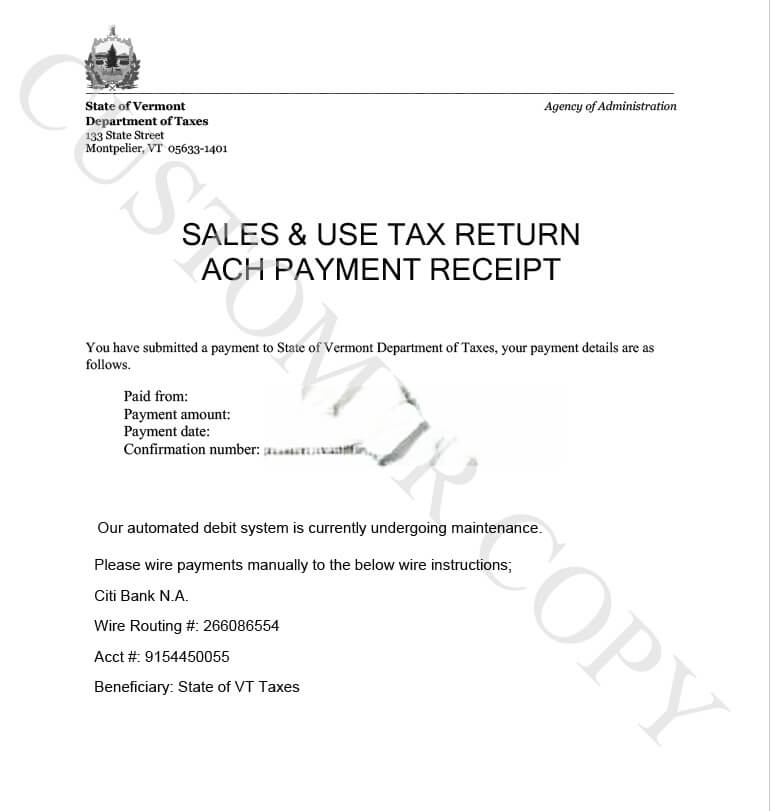
- Letter from State of Vermont Department of Taxes: “Sales & Use Tax Return ACH Payment Receipt”. Fraudulent letter being sent to Vermont business owners instructing them to wire payments manually. Click here to view sample letter.
- Email from Apple: You lost a small amount of money due to fraud; call this number right away (as seen on NewsNation 8/22/25)
- Text re Unpaid Tolls: Your vehicle has an unpaid toll bill. To avoid excessive late fees, please settle it promptly
- Text Smishing Package Tracking: USPS – the package has arrived at the warehouse and cannot be delivered due to incomplete address information. Please confirm your address in the link
- Wedding Photography Scams. Watch out for fake wedding photographers who take your money and don’t deliver. Check their reviews, past work, and always get a contract.
- Natural Disaster Scams. Scammers love an emergency, and often pose as contractors, government officials or charities to steal either money or information.
Common Tax-Related Scams
- Phishing Scams
Scammers send unsolicited emails or text messages that appear to be from the IRS, attempting to steal your personal information. These messages often claim there are issues with your tax return or offer unexpected refunds, prompting you to provide sensitive details. - Phone Scams
Fraudsters impersonate IRS agents, threatening immediate legal action or arrest unless payment is made right away. Payment is often demanded through gift cards or wire transfers, which are difficult to trace. - Identity Theft
Criminals use stolen personal information to file fraudulent tax returns and claim refunds in your name. Protecting your personal data is essential to prevent this type of scam. - Fake Tax Preparers (“Ghost Preparers”)
Some individuals pose as tax professionals without the proper credentials. They may charge fees for nonexistent services, fail to sign your tax return, or submit fraudulent returns. - Unclaimed Refund Scams
Scammers may send fake messages claiming you have unclaimed tax refunds, urging you to provide personal information in order to “claim” the refund. - Employee Retention Credit (ERC) Scams
Fraudsters target businesses by promoting false claims for the ERC, a pandemic-era tax credit, even if the business doesn’t qualify. They may charge high fees for assistance with the application process. - Fake W-2 Scams
Scammers may encourage taxpayers to falsify W-2 forms in order to inflate refunds. This can lead to severe penalties and legal consequences. - Donation and Charity Scams
During tax season, scammers impersonate legitimate charities to solicit donations. Always verify the legitimacy of a charity before making a contribution. - Tax Preparer Fraud
Dishonest tax preparers may falsify information on your tax returns to inflate refunds, charge excessive fees, or fail to sign the return altogether. - Refund Calculation Scams
Scammers may claim they’ve recalculated your refund and ask for personal information to “process” a new refund. - Customer Service Scams
Watch out for fake customer service reps who ask for money or personal info. Always contact companies through official websites or phone numbers.
Protective Measures You Can Take
- Remove your personal information from data sites. Learn how to protect your privacy by removing personal information from data broker websites like National Public Data. Click here to learn more.
- Verify Communications: The IRS will not initiate contact through email, text, or social media. Always verify any unsolicited communication by contacting the IRS directly.
- Safeguard Personal Information: Be cautious when sharing personal or financial information online or over the phone.
- Choose Tax Preparers Wisely: Ensure your tax preparer is legitimate and holds a valid Preparer Tax Identification Number (PTIN).
- Report Scams: If you encounter a tax scam, report it to the IRS or the Social Security Administration to help protect others.
- IRS Identity Theft Protection Tool: Use this security feature to prevent fraudulent use of your Social Security number on federal tax returns by obtaining a unique six-digit PIN. Learn more here: IRS Identity Protection PIN.
Additional Resources & Articles
- To Avoid Data Breach, Resist Giving It Up In The First Place
- 10 Steps to Take if Your Financial Information Has Been Compromised
- Protecting Your Financial Future: 7 Essential Tips to Keep Your Financial Information Secure
- To Avoid Data Breach, Resist Giving It Up In The First Place
- FTC: Vermonters lost $10.5M to scams in 2024
Stay vigilant and informed to protect yourself and your financial security against evolving tax-related scams.
For more information, visit:
irs.gov
ssa.gov
Recipients should not act on the information presented without seeking prior professional advice. Check with your advisor about your specific situation or contact Copper Leaf Financial at 802.878.2731.